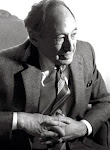
The uncanny valley hypothesis holds that when robots and other facsimiles of humans look and act almost like actual humans, it causes a response of revulsion among human observers. The "valley" in question is a dip in a proposed graph of the positivity of human reaction as a function of a robot's lifelikeness.
Wikipedia
Thanks Jonathan
January 7, 2010

Aldo Leopold
"A thing is right when it tends to preserve the integrity, stability, and beauty of the biotic community. It is wrong when it tends otherwise."
A Sand County Almanac
Aldo Leopold
A Sand County Almanac
Aldo Leopold
FTC reminds us that storing data in the cloud has drawbacks
Take Google's new Nexus One phone as a case study of the pros and cons of storing life details on remote servers. Nexus One phones can back up their complete settings to Google's servers, including data such as "Wi-Fi passwords, bookmarks, a list of the applications you've installed, the words you've added to the dictionary used by the onscreen keyboard, and most of the settings that you configure with the Settings application." Get a new phone and the data transfers easily.
But that data is now sitting on servers outside of your control, where it can be accessed far more easily by Google itself, hackers, and law enforcement than it ever could if kept within the device. Once data passes over the network, it gets much easier to access in realtime; once it is stored on a remote server, it gets much easier to access at any time.
ars technica
But that data is now sitting on servers outside of your control, where it can be accessed far more easily by Google itself, hackers, and law enforcement than it ever could if kept within the device. Once data passes over the network, it gets much easier to access in realtime; once it is stored on a remote server, it gets much easier to access at any time.
ars technica
December 22, 2009
A Patrick Swayze Christmas
Merry Christmas to all of us Modular (wo)men...
God bless you one and all.
December 17, 2009
The secrets behind crazy air-travel prices
Perhaps you've been here: You snag a flight cross country -- and back -- for just $320, board the plane and notice a bunch of empty seats. You think: How can an airline afford this?
A few months later, you repeat the trip on shorter notice. This time, you pay $1,200 for basically the same seat. You think: This airline is making a fortune off me.
But here's the thing: Airlines are not crazy. They know exactly what they're doing. They just don't always tell customers.
And to some extent they can't. The fares are so complicated, and change so often, that no travel agent -- no computer, even -- can tell you just what that ticket to Toledo will cost you next Tuesday.
"The yield-management system at the airlines has gotten so sophisticated," said Victoria Wofford, the president of the business-travel firm Tri-Pen Management. "Travelers certainly don't understand it, and the airline doesn't want them to."
MSN Money
A few months later, you repeat the trip on shorter notice. This time, you pay $1,200 for basically the same seat. You think: This airline is making a fortune off me.
But here's the thing: Airlines are not crazy. They know exactly what they're doing. They just don't always tell customers.
And to some extent they can't. The fares are so complicated, and change so often, that no travel agent -- no computer, even -- can tell you just what that ticket to Toledo will cost you next Tuesday.
"The yield-management system at the airlines has gotten so sophisticated," said Victoria Wofford, the president of the business-travel firm Tri-Pen Management. "Travelers certainly don't understand it, and the airline doesn't want them to."
MSN Money
December 16, 2009
Nanotechnology
The gears above are just 380 microns across, or about four times thicker than a human hair. They're being turned by bacteria that are bumping into the spokes. Scientists at Argonne National Laboratory developed the bacteria-powered gears in an effort to develop "hybrid biomechanical systems." The speed at which the gears turn can be controlled by changing the amount of oxygen in the solution. From an Argonne National Lab press release:
The microgears with slanted spokes, produced in collaboration with Northwestern University, are placed in the solution along with common aerobic bacteria, Bacillus subtilis. Andrey Sokolov of Princeton University and Igor Aronson from Argonne, along with Bartosz A. Grzybowski and Mario M. Apodaca from Northwestern University, discovered that the bacteria appear to swim around the solution randomly, but occasionally the organisms will collide with the spokes of the gear and begin turning it in a definite direction.
A few hundred bacteria are working together in order to turn the gear. When multiple gears are placed in the solution with the spokes connected like in a clock, the bacteria will begin turning both gears in opposite directions and it will cause the gears to rotate in synchrony for a long time.
"Argonne Scientists Use Bacteria to Power Simple Machines"
BoingBoing
Thanks Melvillian
December 14, 2009
US and Russia begin cyberwar limitation talks
The US and Russia have begun talks on limiting the the military use of cyberspace.
Entry into the cyber arms reduction talks - convened by a United Nations arms control committee - represents a significant shift for the US, which has resisted entering such talks for years, the New York Times reports. The change of tack came after the US decided that the cyberwarfare capabilities were spreading across the globe to countries such as North Korea and China.
Subscribe to:
Posts (Atom)